Search

  • Project
  • Resource
  • Project type

  • Region

  • Landscape type

  • Aichi Biodiversity Targets

    What does each Target means
    Target1
    Awareness increased
    Target2
    Biodiversity values integrated
    Target3
    Incentives reformed
    Target4
    Sustainable production and consumption
    Target5
    Habitat loss halved or reduced
    Target6
    Sustainable management of marine living resources
    Target7
    Sustainable agriculture, aquaculture and forestry
    Target8
    Pollution reduced
    Target9
    Invasive alien species prevented and controlled
    Target10
    Pressures on vulnerable ecosystems reduced
    Target11
    Protected areas increased and improved
    Target12
    Extinction prevented
    Target13
    Genetic diversity maintained
    Target14
    Ecosystems and essential services safeguarded
    Target15
    Ecosystems restored and resilience enhanced
    Target16
    Nagoya Protocol in force and operational
    Target17
    NBSAPs adopted as policy instrument
    Target18
    Traditional knowledge respected and integrated
    Target19
    Knowledge improved, shared and applied
    Target20
    Financial resources from all sources increased
  • Kunming-Montreal Global Biodiversity Framework Targets

    What does each Target means
    Target1
    Plan and Manage all Areas To Reduce Biodiversity Loss
    Target2
    Restore 30% of all Degraded Ecosystems
    Target3
    Conserve 30% of Land, Waters and Seas
    Target4
    Halt Species Extinction, Protect Genetic Diversity, and Manage Human-Wildlife Conflicts
    Target5
    Ensure Sustainable, Safe and Legal Harvesting and Trade of Wild Species
    Target6
    Reduce the Introduction of Invasive Alien Species by 50% and Minimize Their Impact
    Target7
    Reduce Pollution to Levels That Are Not Harmful to Biodiversity
    Target8
    Minimize the Impacts of Climate Change on Biodiversity and Build Resilience
    Target9
    Manage Wild Species Sustainably To Benefit People
    Target10
    Enhance Biodiversity and Sustainability in Agriculture, Aquaculture, Fisheries, and Forestry
    Target11
    Restore, Maintain and Enhance Nature’s Contributions to People
    Target12
    Enhance Green Spaces and Urban Planning for Human Well-Being and Biodiversity
    Target13
    Increase the Sharing of Benefits From Genetic Resources, Digital Sequence Information and Traditional Knowledge
    Target14
    Integrate Biodiversity in Decision-Making at Every Level
    Target15
    Businesses Assess, Disclose and Reduce Biodiversity-Related Risks and Negative Impacts
    Target16
    Enable Sustainable Consumption Choices To Reduce Waste and Overconsumption
    Target17
    Strengthen Biosafety and Distribute the Benefits of Biotechnology
    Target18
    Reduce Harmful Incentives by at Least $500 Billion per Year, and Scale Up Positive Incentives for Biodiversity
    Target19
    Mobilize $200 Billion per Year for Biodiversity From all Sources, Including $30 Billion Through International Finance
    Target20
    Strengthen Capacity-Building, Technology Transfer, and Scientific and Technical Cooperation for Biodiversity
    Target21
    Ensure That Knowledge Is Available and Accessible To Guide Biodiversity Action
    Target22
    Ensure Participation in Decision-Making and Access to Justice and Information Related to Biodiversity for all
    Target23
    Ensure Gender Equality and a Gender-Responsive Approach for Biodiversity Action
  • Sustainable Development Goals

    What does each Goal mean
    Goal1
    No poverty
    Goal2
    Zero hunger
    Goal3
    Good health and well-being
    Goal4
    Quality education
    Goal5
    Gender equality
    Goal6
    Clean water and sanitation
    Goal7
    Affordable and clean energy
    Goal8
    Decent work and economic growth
    Goal9
    Industry, innovation, infrastructure
    Goal10
    Reduced inequalities
    Goal11
    Sustainable cities and communities
    Goal12
    Responsible consumption, production
    Goal13
    Climate action
    Goal14
    Life below water
    Goal15
    Life on land
    Goal16
    Peace, justice and strong institutions
    Goal17
    Partnerships for the goals
  • Organisation type

Clear
  • Resources type

  • Region

  • Landscape type

  • Aichi Biodiversity Targets

    What does each Target means
    Target1
    Awareness increased
    Target2
    Biodiversity values integrated
    Target3
    Incentives reformed
    Target4
    Sustainable production and consumption
    Target5
    Habitat loss halved or reduced
    Target6
    Sustainable management of marine living resources
    Target7
    Sustainable agriculture, aquaculture and forestry
    Target8
    Pollution reduced
    Target9
    Invasive alien species prevented and controlled
    Target10
    Pressures on vulnerable ecosystems reduced
    Target11
    Protected areas increased and improved
    Target12
    Extinction prevented
    Target13
    Genetic diversity maintained
    Target14
    Ecosystems and essential services safeguarded
    Target15
    Ecosystems restored and resilience enhanced
    Target16
    Nagoya Protocol in force and operational
    Target17
    NBSAPs adopted as policy instrument
    Target18
    Traditional knowledge respected and integrated
    Target19
    Knowledge improved, shared and applied
    Target20
    Financial resources from all sources increased
  • Kunming-Montreal Global Biodiversity Framework Targets

    What does each Target means
    Target1
    Plan and Manage all Areas To Reduce Biodiversity Loss
    Target2
    Restore 30% of all Degraded Ecosystems
    Target3
    Conserve 30% of Land, Waters and Seas
    Target4
    Halt Species Extinction, Protect Genetic Diversity, and Manage Human-Wildlife Conflicts
    Target5
    Ensure Sustainable, Safe and Legal Harvesting and Trade of Wild Species
    Target6
    Reduce the Introduction of Invasive Alien Species by 50% and Minimize Their Impact
    Target7
    Reduce Pollution to Levels That Are Not Harmful to Biodiversity
    Target8
    Minimize the Impacts of Climate Change on Biodiversity and Build Resilience
    Target9
    Manage Wild Species Sustainably To Benefit People
    Target10
    Enhance Biodiversity and Sustainability in Agriculture, Aquaculture, Fisheries, and Forestry
    Target11
    Restore, Maintain and Enhance Nature’s Contributions to People
    Target12
    Enhance Green Spaces and Urban Planning for Human Well-Being and Biodiversity
    Target13
    Increase the Sharing of Benefits From Genetic Resources, Digital Sequence Information and Traditional Knowledge
    Target14
    Integrate Biodiversity in Decision-Making at Every Level
    Target15
    Businesses Assess, Disclose and Reduce Biodiversity-Related Risks and Negative Impacts
    Target16
    Enable Sustainable Consumption Choices To Reduce Waste and Overconsumption
    Target17
    Strengthen Biosafety and Distribute the Benefits of Biotechnology
    Target18
    Reduce Harmful Incentives by at Least $500 Billion per Year, and Scale Up Positive Incentives for Biodiversity
    Target19
    Mobilize $200 Billion per Year for Biodiversity From all Sources, Including $30 Billion Through International Finance
    Target20
    Strengthen Capacity-Building, Technology Transfer, and Scientific and Technical Cooperation for Biodiversity
    Target21
    Ensure That Knowledge Is Available and Accessible To Guide Biodiversity Action
    Target22
    Ensure Participation in Decision-Making and Access to Justice and Information Related to Biodiversity for all
    Target23
    Ensure Gender Equality and a Gender-Responsive Approach for Biodiversity Action
  • Sustainable Development Goals

    What does each Goal mean
    Goal1
    No poverty
    Goal2
    Zero hunger
    Goal3
    Good health and well-being
    Goal4
    Quality education
    Goal5
    Gender equality
    Goal6
    Clean water and sanitation
    Goal7
    Affordable and clean energy
    Goal8
    Decent work and economic growth
    Goal9
    Industry, innovation, infrastructure
    Goal10
    Reduced inequalities
    Goal11
    Sustainable cities and communities
    Goal12
    Responsible consumption, production
    Goal13
    Climate action
    Goal14
    Life below water
    Goal15
    Life on land
    Goal16
    Peace, justice and strong institutions
    Goal17
    Partnerships for the goals
Clear
9

2022 VIETNAM

Project title :

Mixed species farming and landscape restoration through supporting local families and stakeholders

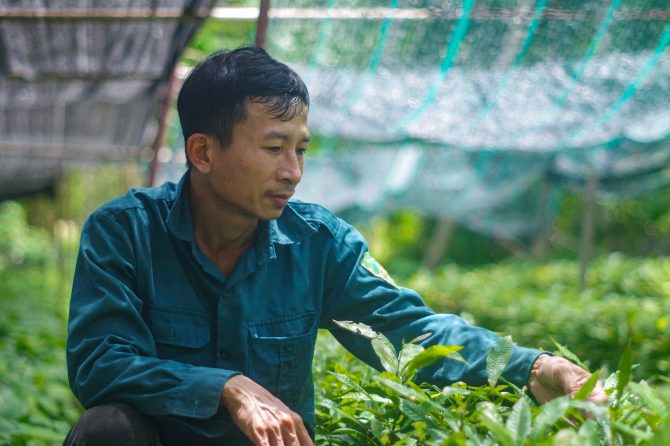
Nguyễn Tiến Hồ, nursery manager at Sơn Kim 1 commune
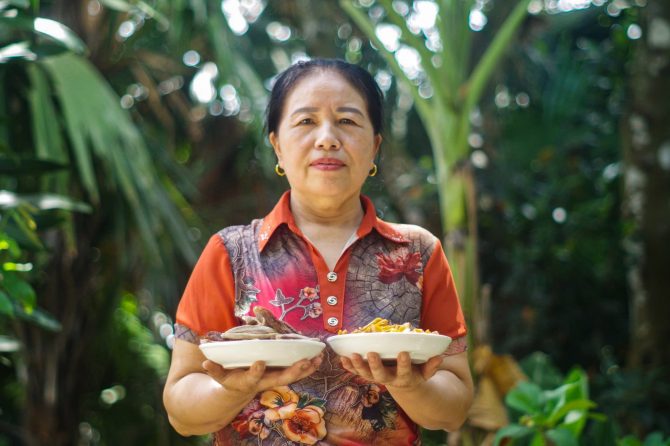
Mother of Phạm Hữu Tình, pilot farm manager, presenting two fruit products from the farm: dried banana (on the left) and jackfruit (on the right)
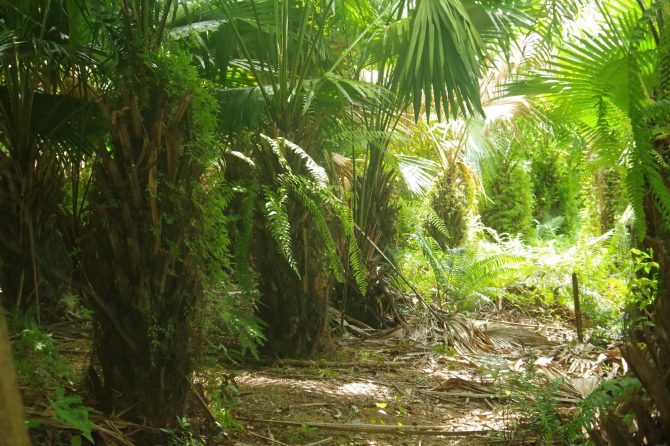
Palm trees on Phạm Hữu Tình’s farmland, one of the pilot farms, where transitioning was conducted
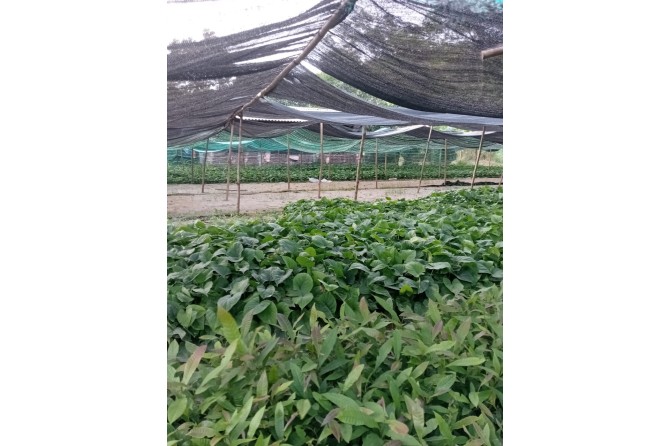
Nursery in Sơn Kim 1 commune with seedlings of two local native species: ‘Thiên niên kiện’ (plant in background, a herbal species) and ‘Cồng’ (plant in foreground, a timber species)
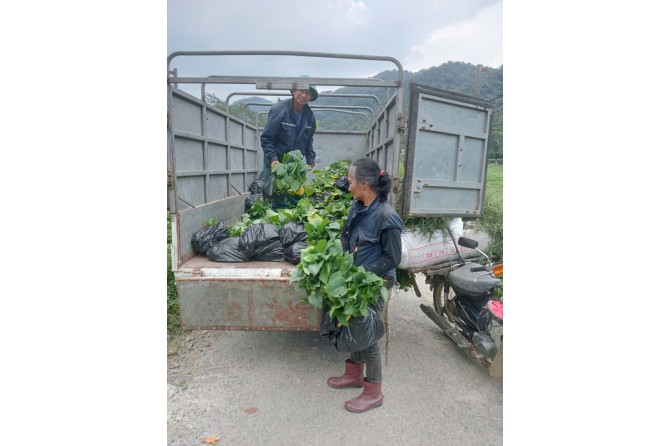
Villagers in Sơn Kim 1 commune receiving ‘Thiên niên kiện’ seedlings for further scaled planting

Nguyễn Tiến Hồ, nursery manager at Sơn Kim 1 commune

Mother of Phạm Hữu Tình, pilot farm manager, presenting two fruit products from the farm: dried banana (on the left) and jackfruit (on the right)

Palm trees on Phạm Hữu Tình’s farmland, one of the pilot farms, where transitioning was conducted

Nursery in Sơn Kim 1 commune with seedlings of two local native species: ‘Thiên niên kiện’ (plant in background, a herbal species) and ‘Cồng’ (plant in foreground, a timber species)

Villagers in Sơn Kim 1 commune receiving ‘Thiên niên kiện’ seedlings for further scaled planting

1 / 20
Organisation :

Social Policy Ecology Research Institute (SPERI)

Project period :

December 2023 - January 2024

Project type :

Community / field-based implementation

Landscape type :

Landscape

Aichi Biodiversity Targets :
  • Awareness increased
  • Biodiversity values integrated
  • Incentives reformed
  • Sustainable production and consumption
  • Ecosystems restored and resilience enhanced
  • Traditional knowledge respected and integrated
  • Knowledge improved, shared and applied
More Detail Copyright BIP/SCBD
Kunming-Montreal Global Biodiversity Framework Targets :
  • Plan and Manage all Areas To Reduce Biodiversity Loss
  • Conserve 30% of Land, Waters and Seas
  • Minimize the Impacts of Climate Change on Biodiversity and Build Resilience
  • Manage Wild Species Sustainably To Benefit People
  • Enhance Biodiversity and Sustainability in Agriculture, Aquaculture, Fisheries, and Forestry
  • Restore, Maintain and Enhance Nature’s Contributions to People
  • Strengthen Capacity-Building, Technology Transfer, and Scientific and Technical Cooperation for Biodiversity
  • Ensure That Knowledge Is Available and Accessible To Guide Biodiversity Action
  • Ensure Participation in Decision-Making and Access to Justice and Information Related to Biodiversity for all
  • Ensure Gender Equality and a Gender-Responsive Approach for Biodiversity Action
More Detail
Sustainable Development Goals :
  • Quality education
  • Gender equality
  • Climate action
  • Life on land
More Detail

Overview

This project supports local families in HEPA and nearby villages in Son Kim 1 commune to engage in mixed-species farming and landscape restoration whilst mainstreaming awareness of area-based conservation OECM. During the implementation, the project directly benefits 5 family farms, supporting provisions of trees seedlings and related agricultural inputs covering a total of 10 hectares. The project site by the account for GIS mapping covers an area of 12.68 ha of all engaged families. Documentation of mixed-species farming and carbon accounting have enlargened OECM area-based conservation of the Son Kim 1 watershed area inclusive of also the family farms is up to 246.67 ha. Awareness raising and OECM-related knowledge reached 153 people, of which 40 are female. Three local media news' articles reported and disseminated mixed species farming and the crucial role of restoring landscape by mixed species for OECM longer benefits from the project activities. The most successful news is the local policy support for uptake and extending 'Thiên niên kiện' one of the trees species from SDM-funded nursery to planting at 300-ha scaled coverage over Son Kim 1 commune. Despite continuous challenges over climatic impacts and extreme temperature ranges, all local families have attempted to replant trees died and continuously developing mixed species farming, and promoting area-based OECM conservation.

Key achievements

  • Local families and communities and stakeholders became more aware of sustainable management of SEPLS and area-based conservation (OECM).
  • Local families, communities and stakeholders became more aware of the value and benefits of mixed species farming (as opposed to monoculture) and better understood the values of biodiversity and ecosystem services generated from mixed species.
  • SEPLS and area-based conservation (OECM) through mixed-species farming on these living-farms have presented more long-term means for improved livelihoods, resilience and climate change mitigation. GIS mapping and carbon accounting from family farms provide unique examples and lessons learned that can be shared with stakeholders and institutions as the very first initiative in Viet Nam. This provides a timely example of the recent Prime Minister's Decision to approve a proposal to establish a carbon market in Viet Nam.

Lessons

  • It is crucial to provide continuing support to farmers and stakeholders for restoration through mixed species farming and collective efforts towards OECM area-based conservation.
  • Early involvement of local authorities at the beginning of the project is important to yield better synergy. Communicating with them and inviting them to be part of the whole process is important in terms of transparency, common awareness and information. This project encouraged local authorities to take on other active roles such as lobbying higher levels of governmental offices to set out other policy support and schemes for the local population, especially those related to OECMs at landscape-scale.
  • It is necessary to document dead trees, and ensure that the trees were re-planted well during the planting process (with proper consideration of serious climate impacts).
  • Expansion of the planting area up to 300 ha of “Thiên niên kiện” was exceptional in terms of policy support and uptake by the local population in Son Kim 1 commune, ensuring that the species brought ecological, health and economic benefits.

Project location

Organisation

Social Policy Ecology Research Institute (SPERI)
Sector
Academic, Educational and / or Research Institute
Country
Vietnam
Website/SNS
http://speri.org/eng/

Aichi Biodiversity Targets

Aichi Biodiversity Targets

  • Awareness increased

  • Biodiversity values integrated

  • Incentives reformed

  • Sustainable production and consumption

  • Ecosystems restored and resilience enhanced

  • Traditional knowledge respected and integrated

  • Knowledge improved, shared and applied

Kunming-Montreal Global Biodiversity Framework Targets

Kunming-Montreal Global Biodiversity Framework Targets

  • Plan and Manage all Areas To Reduce Biodiversity Loss

  • Conserve 30% of Land, Waters and Seas

  • Minimize the Impacts of Climate Change on Biodiversity and Build Resilience

  • Manage Wild Species Sustainably To Benefit People

  • Enhance Biodiversity and Sustainability in Agriculture, Aquaculture, Fisheries, and Forestry

  • Restore, Maintain and Enhance Nature’s Contributions to People

  • Strengthen Capacity-Building, Technology Transfer, and Scientific and Technical Cooperation for Biodiversity

  • Ensure That Knowledge Is Available and Accessible To Guide Biodiversity Action

  • Ensure Participation in Decision-Making and Access to Justice and Information Related to Biodiversity for all

  • Ensure Gender Equality and a Gender-Responsive Approach for Biodiversity Action

Sustainable Development Goals

Sustainable Development Goals

  • Quality education

  • Gender equality

  • Climate action

  • Life on land