Search

  • Project
  • Resource
  • Project type

  • Region

  • Landscape type

  • Aichi Biodiversity Targets

    What does each Target means
    Target1
    Awareness increased
    Target2
    Biodiversity values integrated
    Target3
    Incentives reformed
    Target4
    Sustainable production and consumption
    Target5
    Habitat loss halved or reduced
    Target6
    Sustainable management of marine living resources
    Target7
    Sustainable agriculture, aquaculture and forestry
    Target8
    Pollution reduced
    Target9
    Invasive alien species prevented and controlled
    Target10
    Pressures on vulnerable ecosystems reduced
    Target11
    Protected areas increased and improved
    Target12
    Extinction prevented
    Target13
    Genetic diversity maintained
    Target14
    Ecosystems and essential services safeguarded
    Target15
    Ecosystems restored and resilience enhanced
    Target16
    Nagoya Protocol in force and operational
    Target17
    NBSAPs adopted as policy instrument
    Target18
    Traditional knowledge respected and integrated
    Target19
    Knowledge improved, shared and applied
    Target20
    Financial resources from all sources increased
  • Kunming-Montreal Global Biodiversity Framework Targets

    What does each Target means
    Target1
    Plan and Manage all Areas To Reduce Biodiversity Loss
    Target2
    Restore 30% of all Degraded Ecosystems
    Target3
    Conserve 30% of Land, Waters and Seas
    Target4
    Halt Species Extinction, Protect Genetic Diversity, and Manage Human-Wildlife Conflicts
    Target5
    Ensure Sustainable, Safe and Legal Harvesting and Trade of Wild Species
    Target6
    Reduce the Introduction of Invasive Alien Species by 50% and Minimize Their Impact
    Target7
    Reduce Pollution to Levels That Are Not Harmful to Biodiversity
    Target8
    Minimize the Impacts of Climate Change on Biodiversity and Build Resilience
    Target9
    Manage Wild Species Sustainably To Benefit People
    Target10
    Enhance Biodiversity and Sustainability in Agriculture, Aquaculture, Fisheries, and Forestry
    Target11
    Restore, Maintain and Enhance Nature’s Contributions to People
    Target12
    Enhance Green Spaces and Urban Planning for Human Well-Being and Biodiversity
    Target13
    Increase the Sharing of Benefits From Genetic Resources, Digital Sequence Information and Traditional Knowledge
    Target14
    Integrate Biodiversity in Decision-Making at Every Level
    Target15
    Businesses Assess, Disclose and Reduce Biodiversity-Related Risks and Negative Impacts
    Target16
    Enable Sustainable Consumption Choices To Reduce Waste and Overconsumption
    Target17
    Strengthen Biosafety and Distribute the Benefits of Biotechnology
    Target18
    Reduce Harmful Incentives by at Least $500 Billion per Year, and Scale Up Positive Incentives for Biodiversity
    Target19
    Mobilize $200 Billion per Year for Biodiversity From all Sources, Including $30 Billion Through International Finance
    Target20
    Strengthen Capacity-Building, Technology Transfer, and Scientific and Technical Cooperation for Biodiversity
    Target21
    Ensure That Knowledge Is Available and Accessible To Guide Biodiversity Action
    Target22
    Ensure Participation in Decision-Making and Access to Justice and Information Related to Biodiversity for all
    Target23
    Ensure Gender Equality and a Gender-Responsive Approach for Biodiversity Action
  • Sustainable Development Goals

    What does each Goal mean
    Goal1
    No poverty
    Goal2
    Zero hunger
    Goal3
    Good health and well-being
    Goal4
    Quality education
    Goal5
    Gender equality
    Goal6
    Clean water and sanitation
    Goal7
    Affordable and clean energy
    Goal8
    Decent work and economic growth
    Goal9
    Industry, innovation, infrastructure
    Goal10
    Reduced inequalities
    Goal11
    Sustainable cities and communities
    Goal12
    Responsible consumption, production
    Goal13
    Climate action
    Goal14
    Life below water
    Goal15
    Life on land
    Goal16
    Peace, justice and strong institutions
    Goal17
    Partnerships for the goals
  • Organisation type

Clear
  • Resources type

  • Region

  • Landscape type

  • Aichi Biodiversity Targets

    What does each Target means
    Target1
    Awareness increased
    Target2
    Biodiversity values integrated
    Target3
    Incentives reformed
    Target4
    Sustainable production and consumption
    Target5
    Habitat loss halved or reduced
    Target6
    Sustainable management of marine living resources
    Target7
    Sustainable agriculture, aquaculture and forestry
    Target8
    Pollution reduced
    Target9
    Invasive alien species prevented and controlled
    Target10
    Pressures on vulnerable ecosystems reduced
    Target11
    Protected areas increased and improved
    Target12
    Extinction prevented
    Target13
    Genetic diversity maintained
    Target14
    Ecosystems and essential services safeguarded
    Target15
    Ecosystems restored and resilience enhanced
    Target16
    Nagoya Protocol in force and operational
    Target17
    NBSAPs adopted as policy instrument
    Target18
    Traditional knowledge respected and integrated
    Target19
    Knowledge improved, shared and applied
    Target20
    Financial resources from all sources increased
  • Kunming-Montreal Global Biodiversity Framework Targets

    What does each Target means
    Target1
    Plan and Manage all Areas To Reduce Biodiversity Loss
    Target2
    Restore 30% of all Degraded Ecosystems
    Target3
    Conserve 30% of Land, Waters and Seas
    Target4
    Halt Species Extinction, Protect Genetic Diversity, and Manage Human-Wildlife Conflicts
    Target5
    Ensure Sustainable, Safe and Legal Harvesting and Trade of Wild Species
    Target6
    Reduce the Introduction of Invasive Alien Species by 50% and Minimize Their Impact
    Target7
    Reduce Pollution to Levels That Are Not Harmful to Biodiversity
    Target8
    Minimize the Impacts of Climate Change on Biodiversity and Build Resilience
    Target9
    Manage Wild Species Sustainably To Benefit People
    Target10
    Enhance Biodiversity and Sustainability in Agriculture, Aquaculture, Fisheries, and Forestry
    Target11
    Restore, Maintain and Enhance Nature’s Contributions to People
    Target12
    Enhance Green Spaces and Urban Planning for Human Well-Being and Biodiversity
    Target13
    Increase the Sharing of Benefits From Genetic Resources, Digital Sequence Information and Traditional Knowledge
    Target14
    Integrate Biodiversity in Decision-Making at Every Level
    Target15
    Businesses Assess, Disclose and Reduce Biodiversity-Related Risks and Negative Impacts
    Target16
    Enable Sustainable Consumption Choices To Reduce Waste and Overconsumption
    Target17
    Strengthen Biosafety and Distribute the Benefits of Biotechnology
    Target18
    Reduce Harmful Incentives by at Least $500 Billion per Year, and Scale Up Positive Incentives for Biodiversity
    Target19
    Mobilize $200 Billion per Year for Biodiversity From all Sources, Including $30 Billion Through International Finance
    Target20
    Strengthen Capacity-Building, Technology Transfer, and Scientific and Technical Cooperation for Biodiversity
    Target21
    Ensure That Knowledge Is Available and Accessible To Guide Biodiversity Action
    Target22
    Ensure Participation in Decision-Making and Access to Justice and Information Related to Biodiversity for all
    Target23
    Ensure Gender Equality and a Gender-Responsive Approach for Biodiversity Action
  • Sustainable Development Goals

    What does each Goal mean
    Goal1
    No poverty
    Goal2
    Zero hunger
    Goal3
    Good health and well-being
    Goal4
    Quality education
    Goal5
    Gender equality
    Goal6
    Clean water and sanitation
    Goal7
    Affordable and clean energy
    Goal8
    Decent work and economic growth
    Goal9
    Industry, innovation, infrastructure
    Goal10
    Reduced inequalities
    Goal11
    Sustainable cities and communities
    Goal12
    Responsible consumption, production
    Goal13
    Climate action
    Goal14
    Life below water
    Goal15
    Life on land
    Goal16
    Peace, justice and strong institutions
    Goal17
    Partnerships for the goals
Clear
11

2024 ECUADOR

Project title :

Strengthening governance mechanisms and protection of the community conservation area in the Portoviejo River Estuary, Manabí, Ecuador

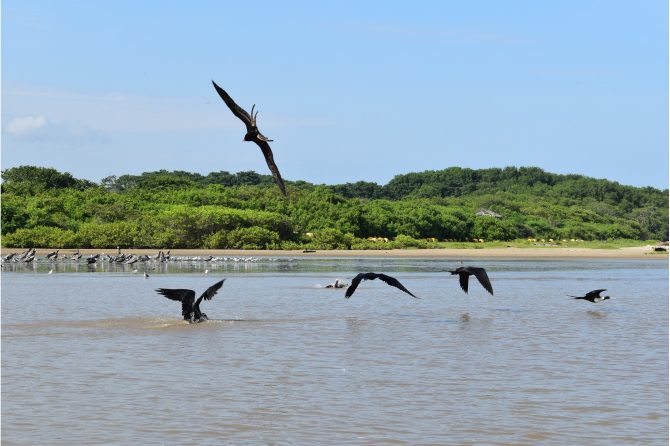
Landscape of the Portoviejo River Estuary
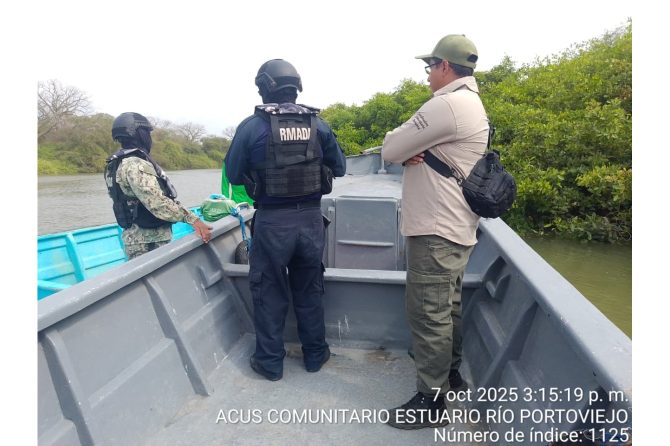
Control patrols with authorities and the community park ranger
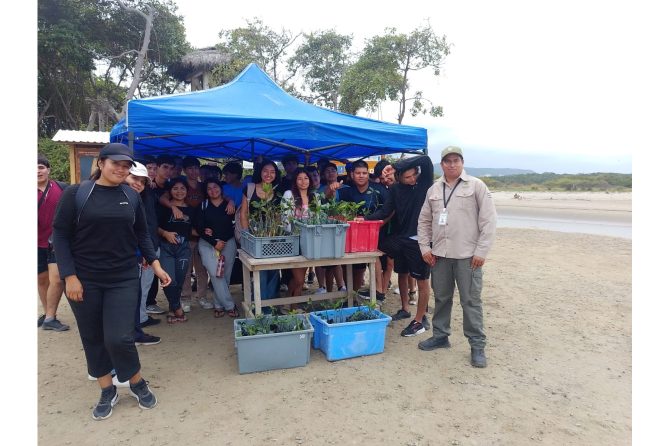
Restoration activity with university students
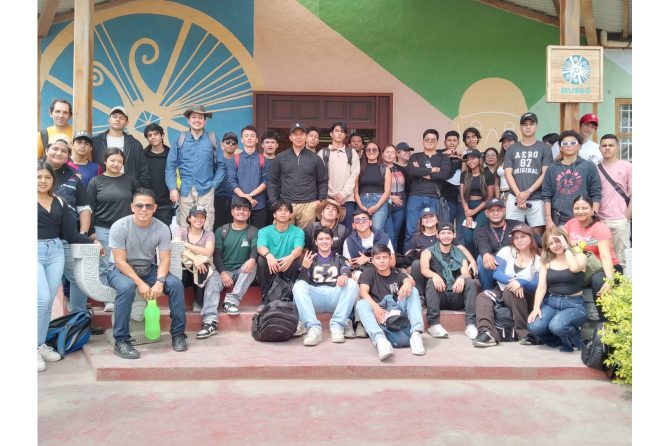
University students visit ACUS and join the workshop
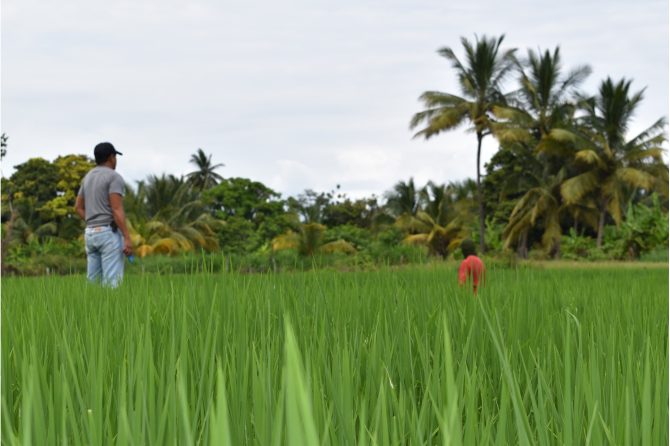
Field visit to support inspection of an organic rice plot
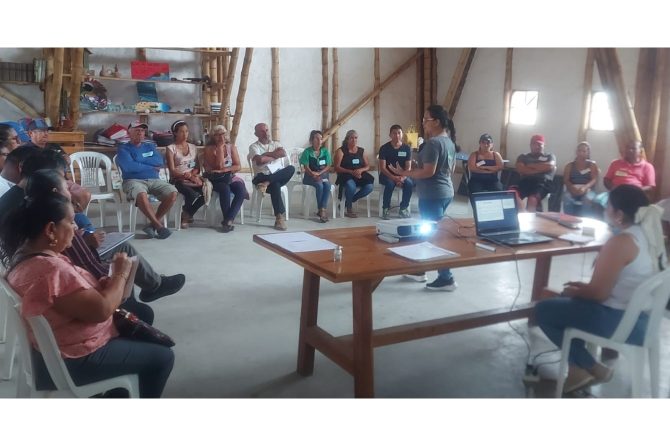
Workshop-socialisation of the ACUS control and surveillance plan

Landscape of the Portoviejo River Estuary

Control patrols with authorities and the community park ranger

Restoration activity with university students

University students visit ACUS and join the workshop

Field visit to support inspection of an organic rice plot

Workshop-socialisation of the ACUS control and surveillance plan

1 / 20
Organisation :

Fundación para la Investigación y Desarrollo Social (FIDES)

Project period :

December 2024 - November 2025

Project type :

Community / field-based implementation

Landscape type :

Landscape

Kunming-Montreal Global Biodiversity Framework Targets :
  • Plan and Manage all Areas To Reduce Biodiversity Loss
  • Restore 30% of all Degraded Ecosystems
  • Conserve 30% of Land, Waters and Seas
  • Enhance Biodiversity and Sustainability in Agriculture, Aquaculture, Fisheries, and Forestry
  • Ensure That Knowledge Is Available and Accessible To Guide Biodiversity Action
  • Ensure Gender Equality and a Gender-Responsive Approach for Biodiversity Action
More Detail
Sustainable Development Goals :
  • Decent work and economic growth
  • Life below water
  • Life on land
More Detail

Overview

The Portoviejo River Estuary Biocorridor in Manabí, Ecuador, is a socio-ecological production landscape facing severe environmental and social pressures. Mangrove degradation, river pollution, land-use change, extractive activities and climate-related risks threaten the integrity of ecosystems that sustain the livelihoods of more than 3,000 people engaged in artisanal fishing, artisanal salt production, ecological rice farming and community-based tourism. Historically, governance was fragmented, and communities lacked the institutional support and tools required for effective territorial management.
With limited resources and a short, one-year implementation period, the project focused on strengthening community governance and fostering coordinated action among local actors. Its main objective was to improve the management of the Community Conservation and Sustainable Use Area (ACUS), covering 238.89 ha with a 785.17-ha buffer zone, while supporting ecosystem integrity and sustainable livelihoods.
Key achievements include consolidating the Environmental Community Coordinator—comprising five communes—as the central governance body and advancing it to the final stage of OECM recognition. A community-based Control and Surveillance Plan was developed and implemented, supported by the training of community park rangers and the introduction of SMART technology for standardised monitoring. Awareness and outreach efforts reached more than 255,000 people, enhancing public support for mangrove, estuary, beach, dune and salt-flat conservation. The project also supported the maintenance of 40 hectares of organic rice production, reinforcing the connection between sustainable production and biodiversity conservation.
Despite its limited timeframe and resources, the project successfully laid the foundation for long-term SEPLS resilience by strengthening governance, enabling multi-actor coordination and reinforcing nature-based livelihoods.

Key achievements

The project achieved significant advances in community-led conservation and governance of the Portoviejo River Estuary SEPLS. The Environmental Community Coordinator—composed of five communes—strengthened its organisational, technical and decision-making capacities, reaching the final stage for official OECM recognition. A community-based control and surveillance system was developed and implemented, including the training of community park rangers and the integration of SMART technology for ecosystem monitoring. Public awareness increased substantially, with more than 255,000 people reached through a digital communication campaign and community meetings, reinforcing support for mangrove, estuary, beach, dune and salt-flat conservation. Additionally, the project supported the continued management of 40 hectares of organic rice fields, contributing to both biodiversity conservation and sustainable livelihoods. Multi-actor coordination through the Biocorridor Working Group (MTB) proved essential, enabling collaboration among more than 20 institutions and ensuring coherent, territory-wide action for long-term SEPLS resilience.

Lessons

The project demonstrated that effective SEPLS conservation requires community leadership supported by strong institutional collaboration. Strengthening governance structures before implementing technical actions proved essential, as the Environmental Community Coordinator became the anchor for all subsequent processes, including OECM recognition and the implementation of the Control and Surveillance Plan. Multi-actor platforms such as the MTB ensure complementary roles, prevent duplicated efforts and enhance territorial coherence. The use of SMART technology showed the importance of integrating community monitoring with national-level systems for improved decision-making. Awareness campaigns revealed that large-scale communication can significantly increase public support for conservation and community tourism. However, external factors—such as insecurity in coastal areas—highlight the need for adaptive strategies and diversified community livelihoods. Finally, the success of organic rice production underscores the value of linking sustainable production with ecosystem restoration and climate resilience.

  • Community-led governance, supported by multi-actor coordination and ecosystem-based livelihoods, is vital for strengthening SEPLS resilience and long-term conservation.

Project location

Organisation

Fundación para la Investigación y Desarrollo Social (FIDES)
Sector
Non-governmental organisation
Country
Ecuador
Website/SNS
https://www.fundacion-fides.com/

Kunming-Montreal Global Biodiversity Framework Targets

Kunming-Montreal Global Biodiversity Framework Targets

  • Plan and Manage all Areas To Reduce Biodiversity Loss

  • Restore 30% of all Degraded Ecosystems

  • Conserve 30% of Land, Waters and Seas

  • Enhance Biodiversity and Sustainability in Agriculture, Aquaculture, Fisheries, and Forestry

  • Ensure That Knowledge Is Available and Accessible To Guide Biodiversity Action

  • Ensure Gender Equality and a Gender-Responsive Approach for Biodiversity Action

Sustainable Development Goals

Sustainable Development Goals

  • Decent work and economic growth

  • Life below water

  • Life on land