11
2024 COLOMBIA
Project title :
Developing a peer-auditing satoyama label to support sustainable coffee production in Colombian SEPLs
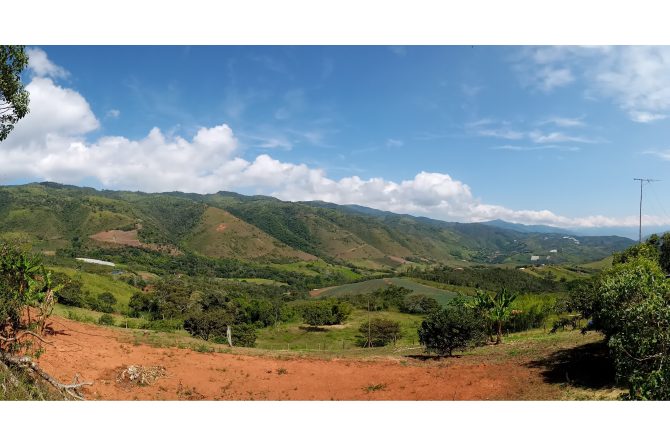
Dagua River Basin Landscape
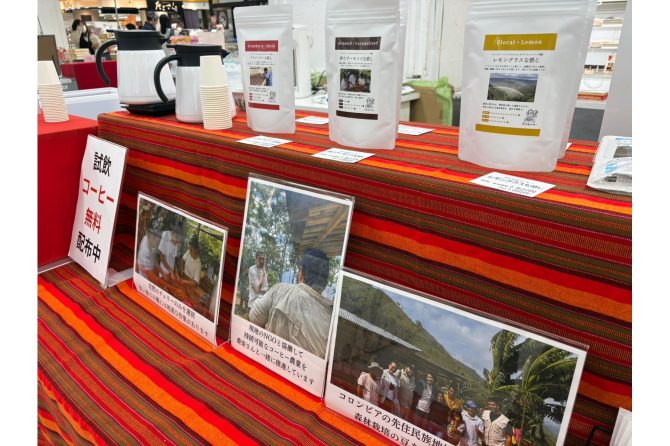
Market test with four variations of Colombian coffee in Japan
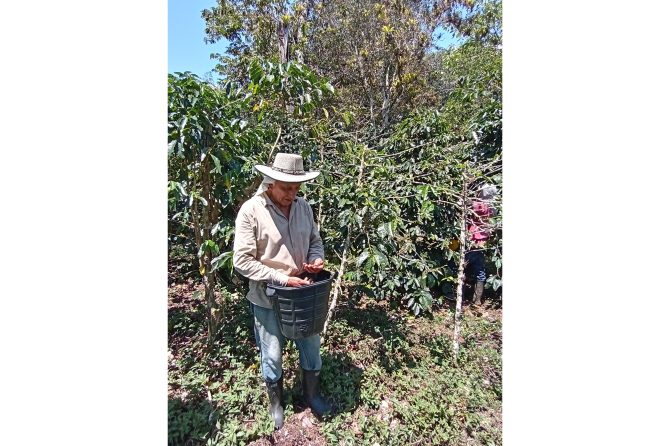
Producer collecting coffee
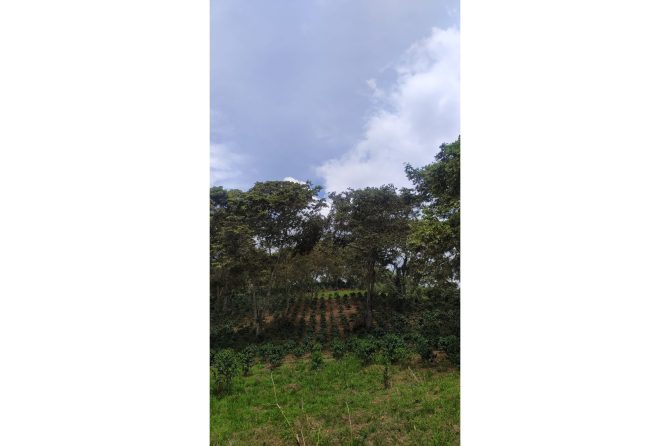
Coffee growing under shade
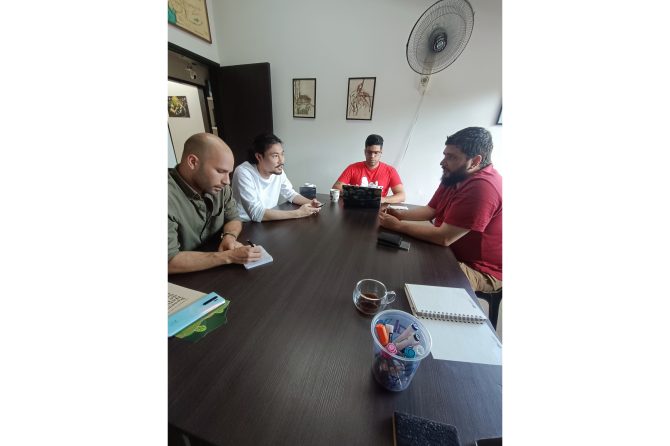
Meeting with the Akita Satoyama Design visitor
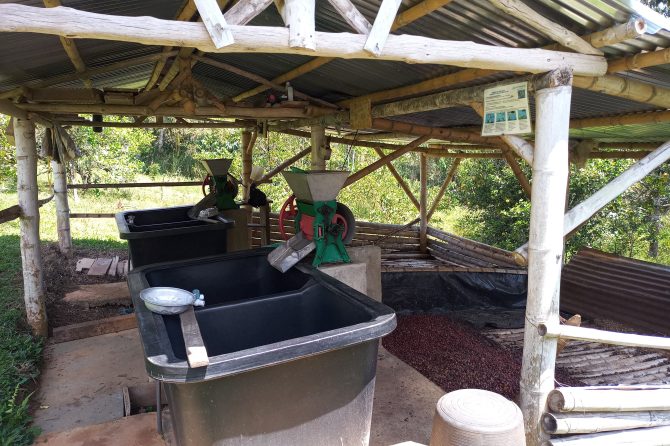
Coffee thresher
/
Organisation :
Corporación Ambiental y Forestal del Pacífico (CORFOPAL)
Project period :
Project type :
Partnership building
Landscape type :
Landscape
Kunming-Montreal Global Biodiversity Framework Targets :


Sustainable Development Goals :
Overview
The project was implemented from December 2024 to April 2026 by CORFOPAL, in collaboration with Akita Satoyama Design and Akita International University (Japan), It addressed a critical gap in the Dagua River Basin SEPLS (Valle del Cauca, Colombia, 140,121 ha): despite sustainable agroforestry, smallholders received below-market farmgate prices through intermediaries, eroding conservation incentives. The Satoyama Label was developed — a low-cost, peer-auditing certification scheme structured around five sustainability dimensions (biodiversity, governance, knowledge, livelihoods, sustainable productive practices), on a 1-to-5 scale, with IPSI peer members conducting audits. A Japanese specialty coffee market analysis covered consumer behaviour (n=4,700), supply chain interviews, pricing, and corporate sustainability trends. A 60 kg direct-trade pilot with naturally processed Colombian coffee was run at a pop-up store in Akita Prefecture, Japan. Natural/Dark Roast sold out (43/43 units), achieving a 12.38% tasting-to-purchase conversion rate — highest of four tested variations. All 13 planned outputs completed; 40 beneficiaries (25 women) trained. The project proves that ecological sustainability, sensory quality, and traceable storytelling generate real economic incentives for SEPLS conservation — a replicable IPSI model.
Key achievements
- Satoyama Label developed: Peer-auditing scheme (5 dimensions, 1–5 scale) designed, field-tested with DRB producers, submitted for IPSI endorsement. QR-code traceable packaging links consumers to producer stories and SEPLS data.
- Market intelligence generated: Japanese specialty coffee market analysis identified consumer preferences (Natural/Dark Roast CVR 12.38%), pricing benchmarks (JPY3,890–JPY11,440/kg), and corporate sustainability demand (TNFD/ESG trends).
- Commercial viability demonstrated: 60 kg direct-trade pilot in Akita, Japan sold Natural/Dark Roast to sell-out, validating demand for Colombian SEPLS coffee.
- Producers trained: 5 sessions, 40 beneficiaries (25 women).
- Replicable model: Satoyama Label provides a scalable template for IPSI members globally.
Lessons
- Sustainable SEPLS coffee wins in premium global markets when quality, peer-certified sustainability, and producer storytelling converge — a replicable model for IPSI members worldwide.
- Quality alone is insufficient: Specialty Coffee Association (SCA) cupping score 76+, peer-certified sustainability, and compelling origin storytelling must work together for premium market entry.
- Natural processing is a win-win: lower water use plus the flavour profile most preferred by Japanese specialty consumers — eliminating the sustainability-vs-commerce trade-off.
- Supply stability is the primary scaling barrier: producer organisation is prerequisite.
- Peer-auditing lowers cost barriers without sacrificing credibility when anchored in IPSI.
- Reciprocal North-South partnerships outperform unidirectional cooperation.
Project location
Organisation
Corporación Ambiental y Forestal del Pacífico (CORFOPAL)
- Sector
- Non-governmental organisation
- Country
- Colombia
- Website/SNS
- https://corfopal.org/
Relevant projects
1
/
20
Projects of the same year
1
/
20
Kunming-Montreal Global Biodiversity Framework Targets
Kunming-Montreal Global Biodiversity Framework Targets
-

Enhance Biodiversity and Sustainability in Agriculture, Aquaculture, Fisheries, and Forestry
-

Enable Sustainable Consumption Choices To Reduce Waste and Overconsumption
-

Strengthen Capacity-Building, Technology Transfer, and Scientific and Technical Cooperation for Biodiversity
-

Ensure That Knowledge Is Available and Accessible To Guide Biodiversity Action
Sustainable Development Goals
Sustainable Development Goals
-

Gender equality
-

Decent work and economic growth
-

Responsible consumption, production
-

Life on land
-

Partnerships for the goals