
Search

  • Project
  • Resource
  • Project type

  • Region

  • Landscape type

  • Aichi Biodiversity Targets

    What does each Target means
    Target1
    Awareness increased
    Target2
    Biodiversity values integrated
    Target3
    Incentives reformed
    Target4
    Sustainable production and consumption
    Target5
    Habitat loss halved or reduced
    Target6
    Sustainable management of marine living resources
    Target7
    Sustainable agriculture, aquaculture and forestry
    Target8
    Pollution reduced
    Target9
    Invasive alien species prevented and controlled
    Target10
    Pressures on vulnerable ecosystems reduced
    Target11
    Protected areas increased and improved
    Target12
    Extinction prevented
    Target13
    Genetic diversity maintained
    Target14
    Ecosystems and essential services safeguarded
    Target15
    Ecosystems restored and resilience enhanced
    Target16
    Nagoya Protocol in force and operational
    Target17
    NBSAPs adopted as policy instrument
    Target18
    Traditional knowledge respected and integrated
    Target19
    Knowledge improved, shared and applied
    Target20
    Financial resources from all sources increased
  • Kunming-Montreal Global Biodiversity Framework Targets

    What does each Target means
    Target1
    Plan and Manage all Areas To Reduce Biodiversity Loss
    Target2
    Restore 30% of all Degraded Ecosystems
    Target3
    Conserve 30% of Land, Waters and Seas
    Target4
    Halt Species Extinction, Protect Genetic Diversity, and Manage Human-Wildlife Conflicts
    Target5
    Ensure Sustainable, Safe and Legal Harvesting and Trade of Wild Species
    Target6
    Reduce the Introduction of Invasive Alien Species by 50% and Minimize Their Impact
    Target7
    Reduce Pollution to Levels That Are Not Harmful to Biodiversity
    Target8
    Minimize the Impacts of Climate Change on Biodiversity and Build Resilience
    Target9
    Manage Wild Species Sustainably To Benefit People
    Target10
    Enhance Biodiversity and Sustainability in Agriculture, Aquaculture, Fisheries, and Forestry
    Target11
    Restore, Maintain and Enhance Nature’s Contributions to People
    Target12
    Enhance Green Spaces and Urban Planning for Human Well-Being and Biodiversity
    Target13
    Increase the Sharing of Benefits From Genetic Resources, Digital Sequence Information and Traditional Knowledge
    Target14
    Integrate Biodiversity in Decision-Making at Every Level
    Target15
    Businesses Assess, Disclose and Reduce Biodiversity-Related Risks and Negative Impacts
    Target16
    Enable Sustainable Consumption Choices To Reduce Waste and Overconsumption
    Target17
    Strengthen Biosafety and Distribute the Benefits of Biotechnology
    Target18
    Reduce Harmful Incentives by at Least $500 Billion per Year, and Scale Up Positive Incentives for Biodiversity
    Target19
    Mobilize $200 Billion per Year for Biodiversity From all Sources, Including $30 Billion Through International Finance
    Target20
    Strengthen Capacity-Building, Technology Transfer, and Scientific and Technical Cooperation for Biodiversity
    Target21
    Ensure That Knowledge Is Available and Accessible To Guide Biodiversity Action
    Target22
    Ensure Participation in Decision-Making and Access to Justice and Information Related to Biodiversity for all
    Target23
    Ensure Gender Equality and a Gender-Responsive Approach for Biodiversity Action
  • Sustainable Development Goals

    What does each Goal mean
    Goal1
    No poverty
    Goal2
    Zero hunger
    Goal3
    Good health and well-being
    Goal4
    Quality education
    Goal5
    Gender equality
    Goal6
    Clean water and sanitation
    Goal7
    Affordable and clean energy
    Goal8
    Decent work and economic growth
    Goal9
    Industry, innovation, infrastructure
    Goal10
    Reduced inequalities
    Goal11
    Sustainable cities and communities
    Goal12
    Responsible consumption, production
    Goal13
    Climate action
    Goal14
    Life below water
    Goal15
    Life on land
    Goal16
    Peace, justice and strong institutions
    Goal17
    Partnerships for the goals
  • Organisation type

Clear
  • Resources type

  • Region

  • Landscape type

  • Aichi Biodiversity Targets

    What does each Target means
    Target1
    Awareness increased
    Target2
    Biodiversity values integrated
    Target3
    Incentives reformed
    Target4
    Sustainable production and consumption
    Target5
    Habitat loss halved or reduced
    Target6
    Sustainable management of marine living resources
    Target7
    Sustainable agriculture, aquaculture and forestry
    Target8
    Pollution reduced
    Target9
    Invasive alien species prevented and controlled
    Target10
    Pressures on vulnerable ecosystems reduced
    Target11
    Protected areas increased and improved
    Target12
    Extinction prevented
    Target13
    Genetic diversity maintained
    Target14
    Ecosystems and essential services safeguarded
    Target15
    Ecosystems restored and resilience enhanced
    Target16
    Nagoya Protocol in force and operational
    Target17
    NBSAPs adopted as policy instrument
    Target18
    Traditional knowledge respected and integrated
    Target19
    Knowledge improved, shared and applied
    Target20
    Financial resources from all sources increased
  • Kunming-Montreal Global Biodiversity Framework Targets

    What does each Target means
    Target1
    Plan and Manage all Areas To Reduce Biodiversity Loss
    Target2
    Restore 30% of all Degraded Ecosystems
    Target3
    Conserve 30% of Land, Waters and Seas
    Target4
    Halt Species Extinction, Protect Genetic Diversity, and Manage Human-Wildlife Conflicts
    Target5
    Ensure Sustainable, Safe and Legal Harvesting and Trade of Wild Species
    Target6
    Reduce the Introduction of Invasive Alien Species by 50% and Minimize Their Impact
    Target7
    Reduce Pollution to Levels That Are Not Harmful to Biodiversity
    Target8
    Minimize the Impacts of Climate Change on Biodiversity and Build Resilience
    Target9
    Manage Wild Species Sustainably To Benefit People
    Target10
    Enhance Biodiversity and Sustainability in Agriculture, Aquaculture, Fisheries, and Forestry
    Target11
    Restore, Maintain and Enhance Nature’s Contributions to People
    Target12
    Enhance Green Spaces and Urban Planning for Human Well-Being and Biodiversity
    Target13
    Increase the Sharing of Benefits From Genetic Resources, Digital Sequence Information and Traditional Knowledge
    Target14
    Integrate Biodiversity in Decision-Making at Every Level
    Target15
    Businesses Assess, Disclose and Reduce Biodiversity-Related Risks and Negative Impacts
    Target16
    Enable Sustainable Consumption Choices To Reduce Waste and Overconsumption
    Target17
    Strengthen Biosafety and Distribute the Benefits of Biotechnology
    Target18
    Reduce Harmful Incentives by at Least $500 Billion per Year, and Scale Up Positive Incentives for Biodiversity
    Target19
    Mobilize $200 Billion per Year for Biodiversity From all Sources, Including $30 Billion Through International Finance
    Target20
    Strengthen Capacity-Building, Technology Transfer, and Scientific and Technical Cooperation for Biodiversity
    Target21
    Ensure That Knowledge Is Available and Accessible To Guide Biodiversity Action
    Target22
    Ensure Participation in Decision-Making and Access to Justice and Information Related to Biodiversity for all
    Target23
    Ensure Gender Equality and a Gender-Responsive Approach for Biodiversity Action
  • Sustainable Development Goals

    What does each Goal mean
    Goal1
    No poverty
    Goal2
    Zero hunger
    Goal3
    Good health and well-being
    Goal4
    Quality education
    Goal5
    Gender equality
    Goal6
    Clean water and sanitation
    Goal7
    Affordable and clean energy
    Goal8
    Decent work and economic growth
    Goal9
    Industry, innovation, infrastructure
    Goal10
    Reduced inequalities
    Goal11
    Sustainable cities and communities
    Goal12
    Responsible consumption, production
    Goal13
    Climate action
    Goal14
    Life below water
    Goal15
    Life on land
    Goal16
    Peace, justice and strong institutions
    Goal17
    Partnerships for the goals
Clear
12

2025 ECUADOR

Project title :

Balancing People and Nature: Creating Galápagos SEPLS Through Research, Restoration & Education

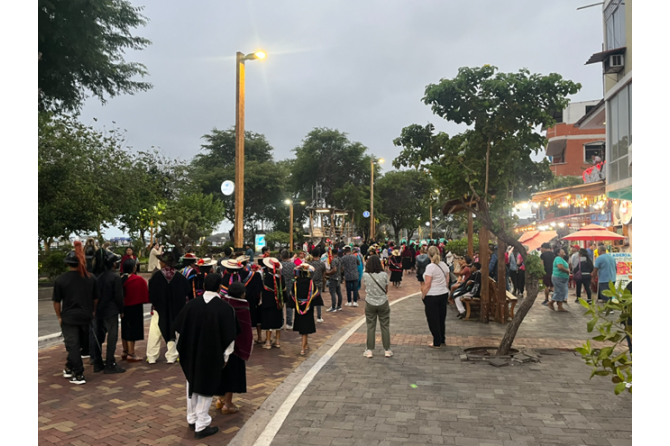
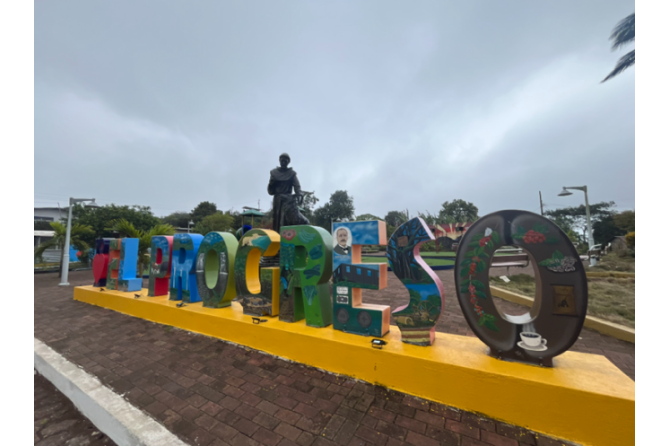
Urban landscape –culture, economy and ecological restoration
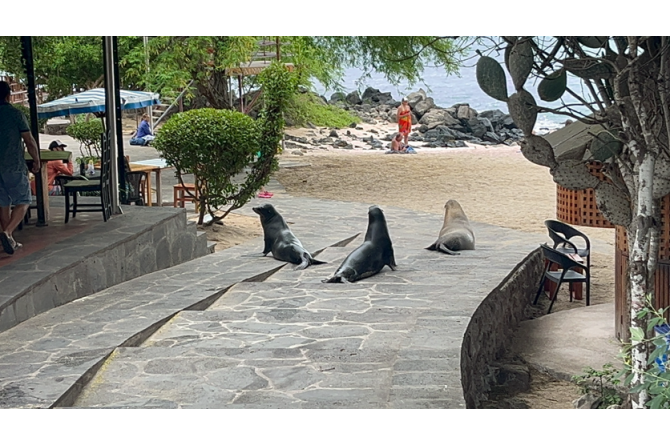
Coastal area – humans and nature
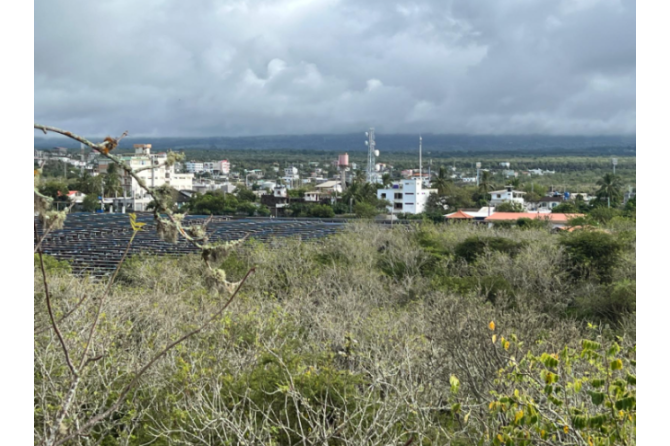
Open/Green Space on the edge of urban area – biodiversity and renewable Energy
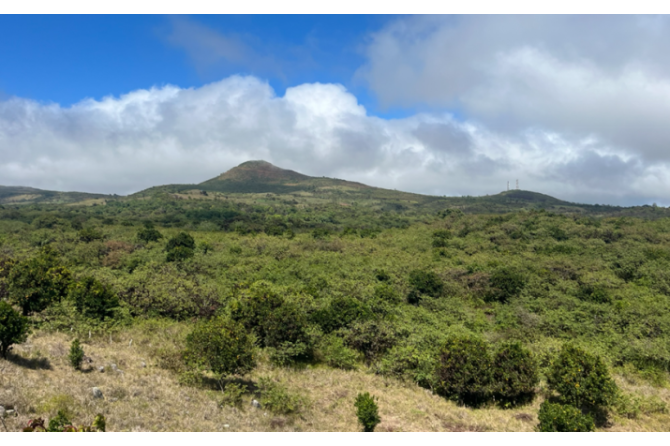
Rural and highland landscape – agroecosystem
Rural town landscape – culture and community

Urban landscape –culture, economy and ecological restoration

Coastal area – humans and nature

Open/Green Space on the edge of urban area – biodiversity and renewable Energy

Rural and highland landscape – agroecosystem

Rural town landscape – culture and community

1 / 20
Organisation :

University of San Francisco de Quito

Project period :

January 2026 - December 2027

Project type :

Community / field-based implementation

Landscape type :

Landscape, Seascape

Kunming-Montreal Global Biodiversity Framework Targets :
  • Plan and Manage all Areas To Reduce Biodiversity Loss
  • Restore 30% of all Degraded Ecosystems
  • Halt Species Extinction, Protect Genetic Diversity, and Manage Human-Wildlife Conflicts
  • Reduce the Introduction of Invasive Alien Species by 50% and Minimize Their Impact
  • Minimize the Impacts of Climate Change on Biodiversity and Build Resilience
  • Enhance Biodiversity and Sustainability in Agriculture, Aquaculture, Fisheries, and Forestry
  • Restore, Maintain and Enhance Nature’s Contributions to People
  • Increase the Sharing of Benefits From Genetic Resources, Digital Sequence Information and Traditional Knowledge
  • Integrate Biodiversity in Decision-Making at Every Level
  • Enable Sustainable Consumption Choices To Reduce Waste and Overconsumption
  • Ensure That Knowledge Is Available and Accessible To Guide Biodiversity Action
  • Ensure Participation in Decision-Making and Access to Justice and Information Related to Biodiversity for all
  • Ensure Gender Equality and a Gender-Responsive Approach for Biodiversity Action
More Detail
Sustainable Development Goals :
  • Zero hunger
  • Good health and well-being
  • Quality education
  • Gender equality
  • Clean water and sanitation
  • Decent work and economic growth
  • Sustainable cities and communities
  • Responsible consumption, production
  • Climate action
  • Life below water
  • Life on land
  • Partnerships for the goals
More Detail

Overview

The Galápagos Islands—the inspiration for Darwin’s theory of evolution and one of the planet’s most ecologically vital regions—depend on healthy SEPLS for long-term sustainability. Yet these systems face growing threats from urban expansion, overtourism, and a declining agricultural and fishing workforce. To address these challenges, a UO-USFQ collaboration proposes a community-centered project on San Cristóbal Island, developing strategies to integrate biodiversity protection into daily life. While San Cristóbal’s 8,000 residents live in scattered settlements, the island is famed for its rich biodiversity, including sea lions, marine iguanas, blue-footed boobies and giant tortoises, as well as dramatic volcanic landforms ranging from coast to highlands, and easy access to the Galapagos Marine Preserve. However, its fragile ecosystem struggles under the pressure of more than 300,000 annual visitors to this region.
Working with local NGOs and government partners and leveraging past experiences, this project will help communities adopt the SEPLS approach for open-space management and link the agri-food system with tourism. It focuses on four components: 1.GIS mapping of ecosystem services to identify SEPLS opportunities; 2. Ecological restoration through invasive species removal and native replanting; 3. Community programmes on conservation, local food production and traditional cooking; 4. Participatory planning to integrate these programmes into park spaces.
The project aims to foster lasting community stewardship of San Cristóbal’s unique biodiversity while promoting sustainable livelihoods. It will assess how these efforts influence community attitudes, governance and behaviour. Lessons learned will then be adapted for other inhabited islands in Galápagos—serving as a model for global conservation efforts.

  • (1) SEPLS assessment
  • (2) Change in community attitude and behaviour regarding SEPLS after participation in various activities
  • (3) Community workshops on park design, system planning and management
  • (4) Community education meetings on SEPLS and local species (esp. for youth)
  • (5) Capacity building workshop to teach local professionals skills and knowledge on SEPLS approach to conservation and development
  • (6) Community removal of invasive plants (workshop and implementation)
  • (7) Community planting of native/endemic plants (workshop and implementation)
  • (8) Training workshops on cultivating native produce and their use in cooking
  • (9) Organise farmer's stands or markets in parks (city and rural town areas)

Project location

Organisation

University of San Francisco de Quito
Sector
Academic, Educational and / or Research Institute
Country
Ecuador
Website/SNS
https://www.usfq.edu.ec/en

Kunming-Montreal Global Biodiversity Framework Targets

Kunming-Montreal Global Biodiversity Framework Targets

  • Plan and Manage all Areas To Reduce Biodiversity Loss

  • Restore 30% of all Degraded Ecosystems

  • Halt Species Extinction, Protect Genetic Diversity, and Manage Human-Wildlife Conflicts

  • Reduce the Introduction of Invasive Alien Species by 50% and Minimize Their Impact

  • Minimize the Impacts of Climate Change on Biodiversity and Build Resilience

  • Enhance Biodiversity and Sustainability in Agriculture, Aquaculture, Fisheries, and Forestry

  • Restore, Maintain and Enhance Nature’s Contributions to People

  • Increase the Sharing of Benefits From Genetic Resources, Digital Sequence Information and Traditional Knowledge

  • Integrate Biodiversity in Decision-Making at Every Level

  • Enable Sustainable Consumption Choices To Reduce Waste and Overconsumption

  • Ensure That Knowledge Is Available and Accessible To Guide Biodiversity Action

  • Ensure Participation in Decision-Making and Access to Justice and Information Related to Biodiversity for all

  • Ensure Gender Equality and a Gender-Responsive Approach for Biodiversity Action

Sustainable Development Goals

Sustainable Development Goals

  • Zero hunger

  • Good health and well-being

  • Quality education

  • Gender equality

  • Clean water and sanitation

  • Decent work and economic growth

  • Sustainable cities and communities

  • Responsible consumption, production

  • Climate action

  • Life below water

  • Life on land

  • Partnerships for the goals