10
2023 ARGENTINA
Project title :
Enhancing knowledge and awareness of the camelids with the Andean communities in the international year IYC (IY of Camelids)
/
Organisation :
VICAM: Vicuñas, camélidos y ambiente
Project period :
Project type :
Community / field-based implementation
Landscape type :
Landscape
Kunming-Montreal Global Biodiversity Framework Targets :


Sustainable Development Goals :
Overview
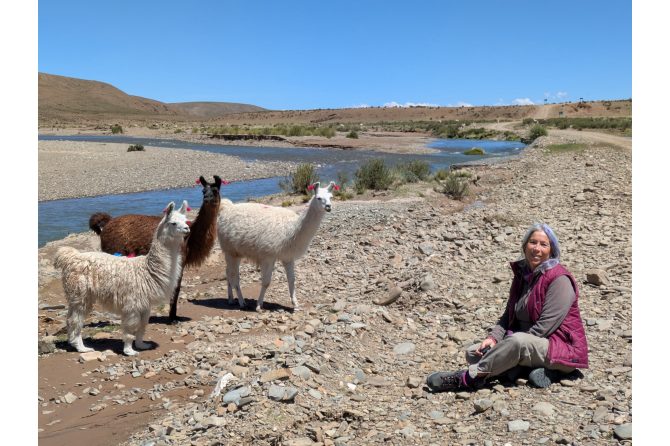
This project was carried out in the culturally distinctive high Andean pastoralism SEPL (the puna or altiplano). The project was based on knowledge co-production between scientists and members of the Quechua indigenous communities and local schools concerning camelids as ecosystem components and as a contribution (NCP) to Andean wellbeing. The UN declared 2024 the International Year of Camelids (IYC), recognising the high value of these species for the livelihood of poor populations in arid zones. We took this opportunity to create new frameworks for education and area-based conservation projects that acknowledge the contributions of camelids to people and their multiple forms of valorisation (intrinsic, instrumental and particularly relational values).
We engage in various activities, including:
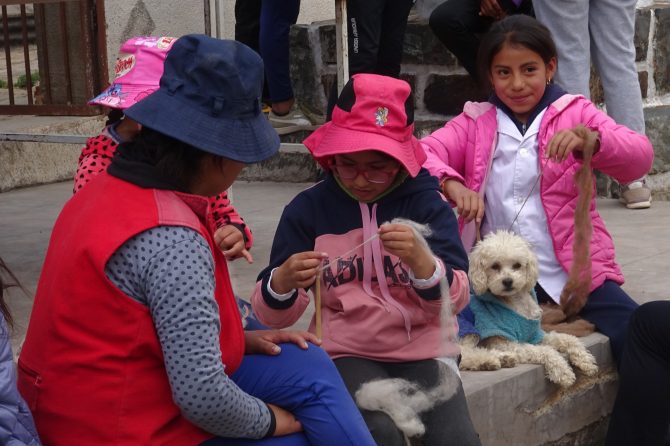
- Primary and secondary school programmes for children.
Collaborative activities with the community council, which include:
- A bonding ceremony
- A spinning contest
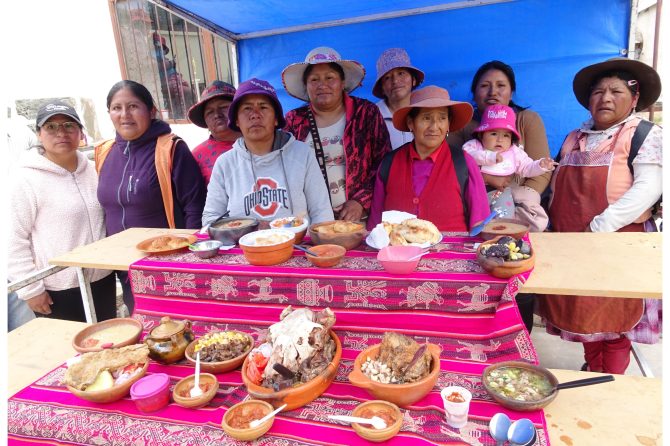
- A cooking exhibition featuring traditional dishes made with llama meat
- Preparation of llama sausages
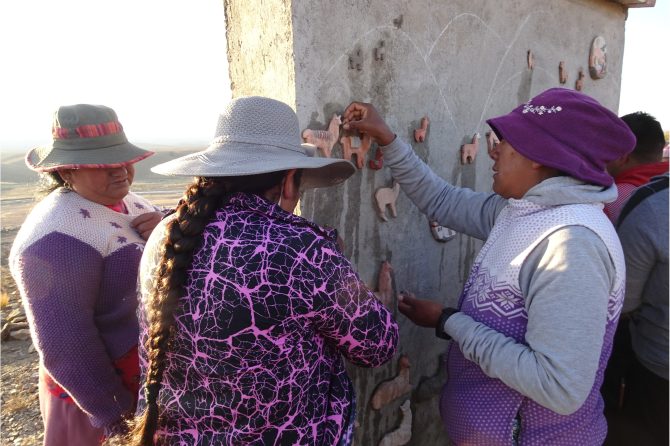
- Creation of a mural
- Participation in the Ashka Llama festival.
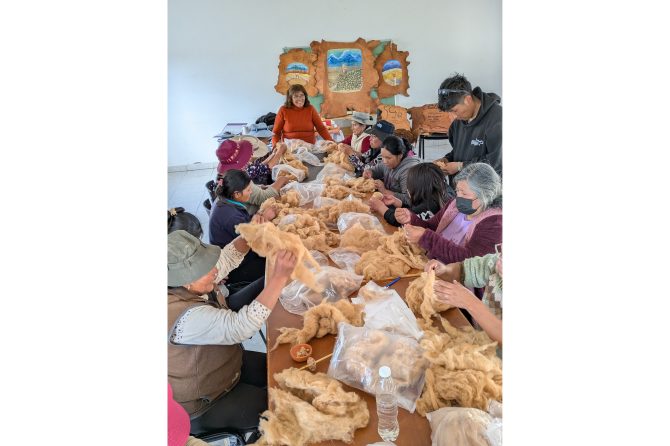
- Training sessions on vicuña fibre spinning.
In partnership with the Ministry of Education, we offered a teacher training course "Los Camelidos."
Through the Biological VICAM Programme, we conduct biodiversity surveys and develop management plans for sustainability.
- Census counts of key species, such as vicuñas and suris
- Measures of plant biomass
- Livestock counts
- Calculations of carrying capacity and assessment of overgrazing
Additionally, we wrote two books (one for children and one for adults)
Key achievements
- Enhanced knowledge and awareness of the importance of sustainable pastoralism among the youth through the distribution of the specialised book to comply with resolution 72/210 "International Year of Camelids" which encourages the public to become more aware of the economic and cultural importance of camelids. Recognition one the importance of llamas as part of Andean food sovereignty.
- Indigenous community institutions are recognized and empowered. In particular, appreciation of the community council of Santa Catalina, in terms of their role as custodians and guardians of the camelids, and as key actors in the pastoral way of life and beneficiaries of the products (CNP) derived from the camelids.
- Training of local communities, especially women in spinning and weaving with vicuñas fibre. Teacher training for sustainable education based on camelids, in local schools.
- Data gathered on demography of vicuñas and suris, including surveys of llamas and sheep, and development of sustainable models.
- Publication of one book including photographs, and a children's book.
Lessons
At VICAM, we believe that the most impactful projects arise from community proposals and needs. Working on transdisciplinary science, including local and gender knowledge, enriches our research. The community council's proposals included topics focused on food sovereignty, as well as art and spirituality. One important lesson we learned was that it was crucial to propose a tangible solution, such as teaching a course, to a decision-maker who was not organising activities for the IYC celebration —in this case, the Secretary of Educational Management. This approach helped us gain official support and led to an extraordinary number of teachers participating in our initiative. The other lesson learned is how to carry out (our biological project) long-term work with short-term financing (with samplings for two years)
- International years, days and decades should be celebrated from the ground up, recognising local people within their territories.
Project location
Organisation
VICAM: Vicuñas, camélidos y ambiente
- Sector
- Research Group
- Country
- Argentina
- Website/SNS
- https://www.vicam.org.ar/
Relevant projects
1
/
20
Projects of the same year
1
/
20
Kunming-Montreal Global Biodiversity Framework Targets
Kunming-Montreal Global Biodiversity Framework Targets
-

Plan and Manage all Areas To Reduce Biodiversity Loss
-

Conserve 30% of Land, Waters and Seas
-

Halt Species Extinction, Protect Genetic Diversity, and Manage Human-Wildlife Conflicts
-

Ensure Sustainable, Safe and Legal Harvesting and Trade of Wild Species
-

Manage Wild Species Sustainably To Benefit People
-

Restore, Maintain and Enhance Nature’s Contributions to People
-

Increase the Sharing of Benefits From Genetic Resources, Digital Sequence Information and Traditional Knowledge
-

Integrate Biodiversity in Decision-Making at Every Level
-

Strengthen Capacity-Building, Technology Transfer, and Scientific and Technical Cooperation for Biodiversity
-

Ensure That Knowledge Is Available and Accessible To Guide Biodiversity Action
-

Ensure Participation in Decision-Making and Access to Justice and Information Related to Biodiversity for all
-

Ensure Gender Equality and a Gender-Responsive Approach for Biodiversity Action
Sustainable Development Goals
Sustainable Development Goals
-

Quality education
-

Gender equality
-

Clean water and sanitation
-

Life on land