10
2023 GHANA
Project title :
Safeguarding the ecological integrity of the Atewa Forest Reserve through the promotion of best agroecological practices
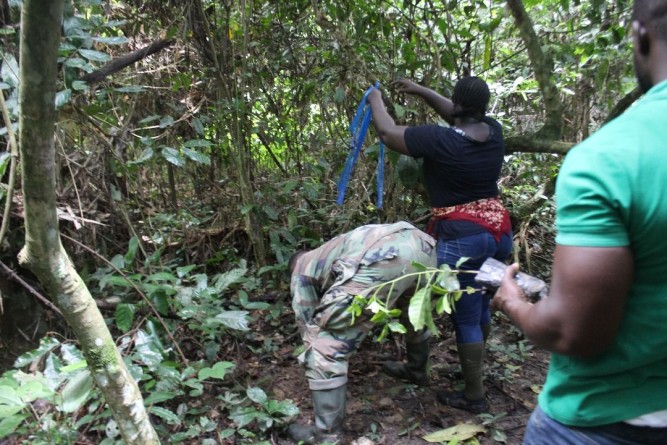
Tree planting activity in agricultural landscape and buffer zones
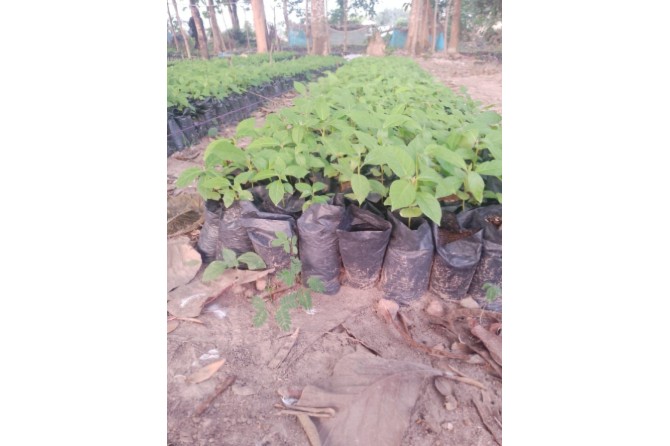
Obuoho community Nursery
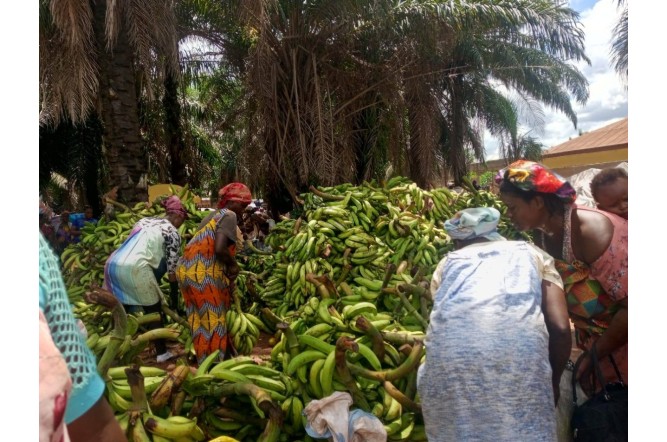
Women sell their plantain at Anum Apapam
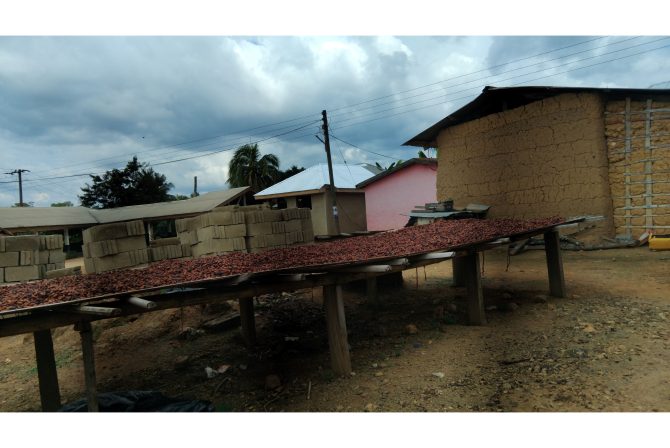
Drying of Cocoa seeds
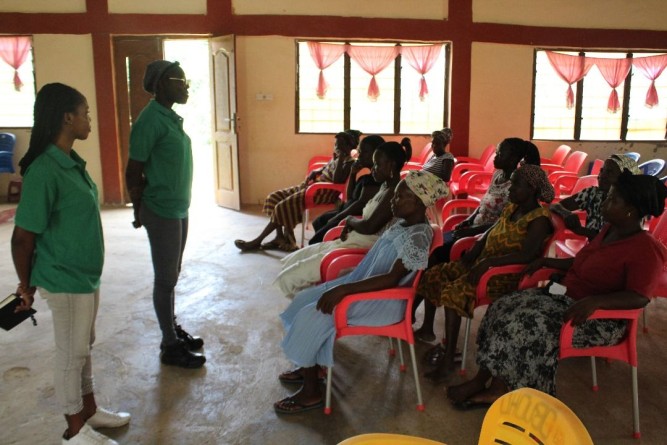
Education on the value of biodiversity
/
Organisation :
Conservation Alliance International
Project period :
Project type :
Community / field-based implementation
Landscape type :
Landscape
Kunming-Montreal Global Biodiversity Framework Targets :


Sustainable Development Goals :
Overview
The project aimed to safeguard the ecological integrity of the Atewa Forest Reserve by promoting sustainable practices among local communities, with a focus on empowering women in resource governance and sustainable agriculture. Implemented by Conservation Alliance International with funding from the Satoyama Development Mechanism, this project made substantial strides in environmental conservation and community empowerment.
The project’s core activities included strengthening the Yonkodo Women's Cooperative, where 30 women leaders were trained to adapt to sustainable practices and spread knowledge on biodiversity conservation and good agricultural practices (GAPs) within their communities. These women became forest governance advocates and shared sustainable farming techniques with approximately 500 local farmers, resulting in increased adoption of good agricultural practices and enhanced soil health.
Market linkages were developed to support economic sustainability, facilitating access to fair markets for farm produce by women. Restoration efforts involved planting over 1,000 seedlings (Khaya ivorensis, Terminalia superba, Terminalia ivorensis) across agricultural and forest buffer zones, contributing to improved microclimates and ecosystem resilience. A community nursery was established, ensuring the availability of seedlings for ongoing reforestation. The project also developed a GPS-based database to monitor forest and land-use changes, increasing data accessibility for local governance and conservation planning.
In conclusion, the project effectively empowered local communities, particularly women, in sustainable practices, strengthening both environmental and socio-economic resilience, and establishing a foundation for long-term forest conservation and community-led environmental stewardship.
Key achievements
Unprecedented community leadership: Beyond the project's boundaries, local development and conservation efforts were driven by the women's cooperative, which has grown into a powerful and influential force in the community regarding resource governance.
Adoption of good conservation and agricultural practices: More women in the project community adopted good agricultural practices, including agroforestry, integrated pest management and no slash-and-burn during land preparation, among others.
- Seven key stakeholders identified.
- 500 women farmers included the cooperative. Strengthened in resource governance.
- 42 women farmers’ capacity strengthened in good agricultural practices.
- 30 farmers linked to fair markets.
- 1000 indigenous trees planted on 20ha of land, including agricultural landscape and deforested areas.
- Data management and monitoring to track project progress.
Lessons
A sustainable approach to conservation must seamlessly integrate livelihood opportunities with environmental stewardship, fostering both ecological resilience and economic well-being. To ensure lasting impacts, capacity building is essential. Training programmes, as demonstrated in this project, have equipped local women with vital skills in sustainable farming, biodiversity conservation and resource governance, enabling them to lead conservation efforts independently.
- Empowering women to promote biodiversity conservation and sustainable farming practices to enhance human well-being.
Project location
Organisation
Conservation Alliance International
- Sector
- Non-governmental organisation
- Country
- Ghana
- Website/SNS
- https://conservealliance.org/
Relevant projects
1
/
20
Projects of the same year
1
/
20
Kunming-Montreal Global Biodiversity Framework Targets
Kunming-Montreal Global Biodiversity Framework Targets
-

Conserve 30% of Land, Waters and Seas
-

Enhance Biodiversity and Sustainability in Agriculture, Aquaculture, Fisheries, and Forestry
-

Restore, Maintain and Enhance Nature’s Contributions to People
-

Enhance Green Spaces and Urban Planning for Human Well-Being and Biodiversity
-

Enable Sustainable Consumption Choices To Reduce Waste and Overconsumption
-

Strengthen Biosafety and Distribute the Benefits of Biotechnology
-

Strengthen Capacity-Building, Technology Transfer, and Scientific and Technical Cooperation for Biodiversity
-

Ensure Gender Equality and a Gender-Responsive Approach for Biodiversity Action
Sustainable Development Goals
Sustainable Development Goals
-

Gender equality
-

Reduced inequalities
-

Life below water